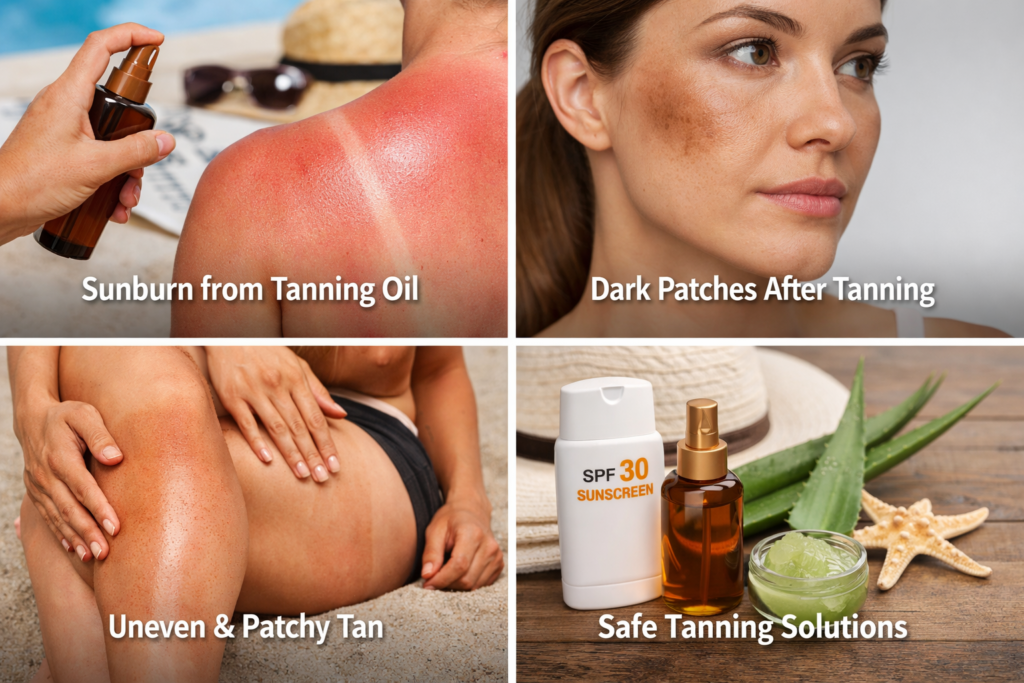
Tanning Oils Causing Sunburn, Dark Patches or Uneven Tan? Dermatology-Based Fixes That Actually Work
You planned a glowing sun-kissed tan.
Instead, your skin feels sore, looks patchy, and now dark spots are appearing in places you never expected.
This happens to thousands of people every summer.
Not because tanning is always harmful — but because most people tan without understanding how skin scientifically reacts to sunlight and tanning oils.
When used incorrectly, tanning oils can increase UV penetration, disturb pigment balance, and damage the skin barrier.
Disclaimer:
The information provided in this article is for educational and awareness purposes only. Skin reactions to sun exposure and skincare products vary between individuals. It is advisable to consult a qualified dermatologist or healthcare professional before starting any tanning routine or applying new skincare solutions.
Why Tanning Oils Can Increase Sunburn Risk
Tanning is the body’s protective response to ultraviolet radiation.
Melanin production increases to absorb UV rays — but excessive exposure overwhelms this defense system.
Common Mistake: Using Tanning Oil Without Sunscreen
Many tanning oils offer little or no SPF protection.
Applying them directly can intensify UV absorption, increasing the likelihood of sunburn, redness, and peeling.
Dermatology-Backed Solution
- Use broad-spectrum sunscreen (SPF 30 or higher) before tanning oil
- Reapply every 2 hours
- Prefer water-resistant formulas
- Avoid peak UV hours (10 AM – 4 PM)
Gradual exposure allows controlled tanning rather than inflammatory damage.
Dark Patches After Tanning — Real Medical Reasons
Dark patches often develop due to post-inflammatory hyperpigmentation or uneven melanocyte activity.
Sensitive areas like cheeks, upper lip, shoulders, and knees are more prone to deeper pigmentation.
Scientifically Logical Prevention
- Apply antioxidants like vitamin C or niacinamide to help regulate pigment pathways
- Maintain strong skin barrier with ceramide moisturizers
- Avoid tanning if you have melasma or active pigmentation disorders
Barrier health plays a crucial role in even tanning outcomes.
Uneven Tan and Patchy Skin — Why It Happens
Different body areas have varying skin thickness and cell turnover rates.
Dead skin buildup leads to irregular pigment absorption.
Sudden prolonged exposure also creates burned areas alongside untanned regions.
Medical Advisory:
The skincare approaches discussed below are based on general dermatological guidance. Individuals with sensitive skin, allergies, chronic skin conditions, or recent cosmetic procedures should seek professional medical advice before following these recommendations.
Practical Steps for More Even Tanning
- Gentle exfoliation 24 hours before tanning
- Apply tanning oil evenly using circular motion
- Start with short sun exposure sessions (15–20 minutes)
- Allow rest days between tanning sessions
This gradual method supports balanced melanin distribution.
Post-Tanning Skin Recovery That Dermatologists Recommend
After sun exposure, skin enters a repair phase.
Proper aftercare reduces inflammation and prevents long-term pigmentation.
Evidence-Based Recovery Routine
- Take a cool or lukewarm shower
- Apply after-sun lotion containing aloe vera, glycerin, or panthenol
- Stay hydrated to support cellular repair
- Avoid further sun exposure if redness or peeling occurs
Severe symptoms like blistering require medical consultation.
Safe Tanning Tips for Long-Lasting Glow
- Never chase rapid tanning — skin damage accumulates silently
- Protect high-risk areas like face and shoulders
- Use protective accessories like hats and light cover-ups
- Maintain consistent skincare routine even after tan develops
Healthy tanning is about management, not maximum exposure.
Final Disclaimer:
This article is intended for informational purposes only and should not be considered medical advice, diagnosis, or treatment. Always consult a licensed dermatologist or healthcare provider regarding sun exposure risks, skin pigmentation concerns, or the use of tanning oils, lotions, or skincare products. Individual skin responses may differ.